


23 en stock
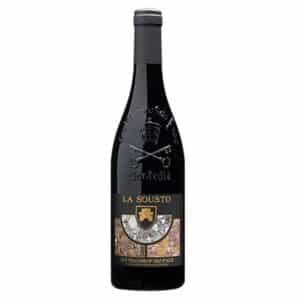
Chateau fines roches - La Sousto
Accueil »
Château des Fines Roches is one of the historic estates of Châteauneuf-du-Pape. Easily recognizable by its imposing neo-medieval silhouette overlooking the vineyards, the château is closely intertwined with the winegrowing and cultural history of the village. Now part of the Vignobles Mousset-Barrot, it continues a family tradition passed down through several generations.
Filter by
Showing all 5 results
Introduction: Château des Fines Roches, a Historic Estate in Châteauneuf-du-Pape
Château des Fines Roches is one of the historic estates of Châteauneuf-du-Pape. Easily recognizable by its imposing neo-medieval silhouette overlooking the vineyards, the château is closely linked to the winegrowing and cultural history of the village. Now part of the Vignobles Mousset-Barrot, it continues a family tradition passed down through several generations.
Its wines are crafted with full respect for the identity of Châteauneuf-du-Pape, from terroirs dominated by the appellation’s famous rounded pebbles resting on red clay subsoils. The estate notably produces both red and white Châteauneuf-du-Pape, combining Mediterranean generosity, balance, and excellent ageing potential.
Château des Fines Roches therefore remains one of the historic signatures of the appellation, appreciated both for its heritage and for the distinctive character of its wines.
A History That Began in the Late 19th Century
The modern history of Château des Fines Roches dates back to the late 19th century. Henri-Auguste Constantin, the château’s first owner, acquired the estate and undertook major building works. He commissioned a spectacular residence inspired both by the ramparts of Avignon and by the ancient château overlooking the village of Châteauneuf-du-Pape.
Alongside this distinctive architectural project, Constantin also developed the vineyards with the ambition of establishing Fines Roches as a benchmark wine estate. From that period onward, the property gained genuine recognition and became one of the symbols of the revival of the Châteauneuf-du-Pape vineyards.
Château des Fines Roches and Provençal Culture
At the beginning of the 20th century, Château des Fines Roches also became an important center of Provençal culture. From 1915 onward, the Marquis Folco de Baroncelli, a descendant of an old Florentine family, helped establish the château as a place of gathering, tradition, and cultural exchange.
Figures associated with the Félibrige movement and Provençal literature were among those who visited the estate, including Frédéric Mistral, Joseph Roumanille, and Alphonse Daudet.
This cultural dimension gave Château des Fines Roches a distinctive identity: beyond wine, the estate became one of the living witnesses to the history of Provence and Châteauneuf-du-Pape.
The Mousset Family and Several Generations of Winegrowers
A new chapter began in 1936, when Louis Mousset acquired Château des Fines Roches along with approximately 45 hectares of vineyards. The estate then became the heart of a family venture that would continue through several generations.
Catherine Mousset and Robert Barrot carried this story forward and went on to create Vignobles Mousset-Barrot, bringing together the family’s various wine estates.
Today, Gaëlle and Amélie represent the generation leading the family domains, supported notably by Robert and Fred, Gaëlle’s husband and the estate’s oenologist. This strong family continuity helps preserve the historic heritage of Château des Fines Roches while allowing viticultural practices and winemaking methods to evolve over time.
An Emblematic Terroir of Rounded Pebbles and Red Clay
The terroir of Château des Fines Roches perfectly reflects the character of the great sectors of Châteauneuf-du-Pape. The vines grow on soils covered with rounded pebbles, with red clay lying beneath the surface.
These stones absorb the sun’s heat during the day and gradually release it at night, helping the grapes to ripen fully. The deeper clay layers also provide an important water reserve for the vines during the dry periods typical of the Mediterranean climate.
This combination contributes to producing generous, structured wines while preserving the balance that is essential to great Châteauneuf-du-Pape.
Viticulture with a Strong Focus on Terroir
Vineyard work plays a central role in the philosophy of Vignobles Mousset-Barrot. Particular attention is paid to soil management, with regular interventions carried out from February through to the end of July.
The estate follows a reasoned approach to vineyard treatments, limiting interventions according to the needs of each vintage. Since 2000, it has also used a biological mating-disruption technique to control certain vineyard pests, allowing it to avoid the use of insecticides for this particular issue.
This approach is designed to preserve the vineyard environment as much as possible while enabling the grapes to express the distinctive character of the terroir.
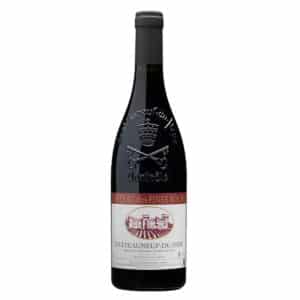
Château des Fines Roches Châteauneuf-du-Pape Red
The red Châteauneuf-du-Pape is the historic cuvée of Château des Fines Roches. According to the estate, the blend is based primarily on Grenache Noir, accounting for 69%, complemented by 15% Syrah, 8% Mourvèdre, and 5% Cinsault. Muscardin, Counoise, and Vaccarèse complete the varietal composition.
Traditional vinification takes place in stainless steel tanks, with an average maceration period of around 21 days. Part of the blend is then aged for twelve months in large oak foudres.
The estate describes a wine with a deep ruby colour, marked by spice and red-fruit aromas, combining both balance and generosity. Its ageing potential is estimated at between ten and fifteen years, depending on the vintage and storage conditions.
The Style of Château des Fines Roches Red Wines
Château des Fines Roches red follows a classic Châteauneuf-du-Pape style in which Grenache plays a central role. It brings fruit, richness, and generosity, while Syrah and Mourvèdre add structure and complexity to the blend. The complementary grape varieties, typical of the appellation’s ampelographic heritage, contribute to the overall balance.
In its youth, the wine can be enjoyed for its fruit-driven character and spicy notes. After a few years in the cellar, the texture becomes more harmonious and the wine develops more evolved nuances.
It is therefore a Châteauneuf-du-Pape that can be enjoyed relatively young while also offering the ability to age gracefully over a longer period.
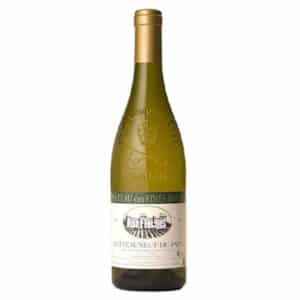
Château des Fines Roches Châteauneuf-du-Pape White
LChâteau des Fines Roches also produces a white Châteauneuf-du-Pape from five hectares of vines with an average age of around thirty years. The blend is dominated by 50% Grenache Blanc, complemented by 20% Clairette, 20% Bourboulenc, and 10% Roussanne.
Vinification is carried out at low temperatures, between 16 and 18°C, in concrete vats. The estate chooses not to use oak, including during the ageing process, which…


